
Rules of Blackjack
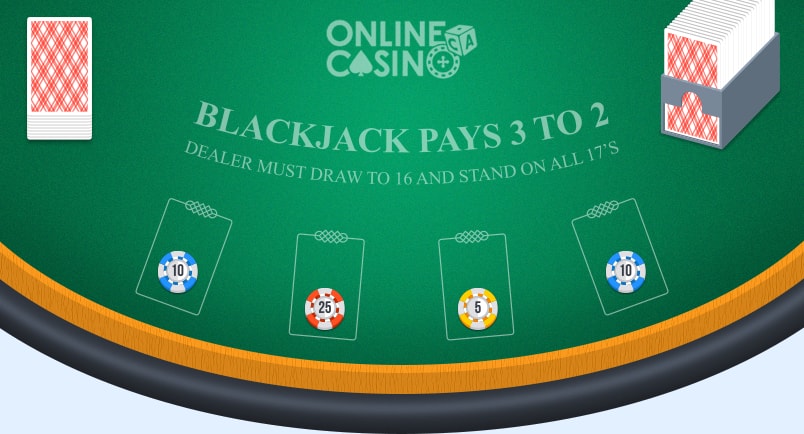
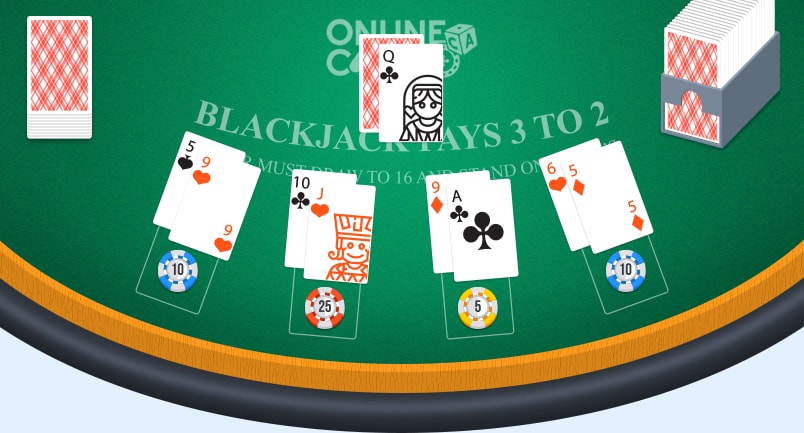
Object of the game: Beat the dealer by:
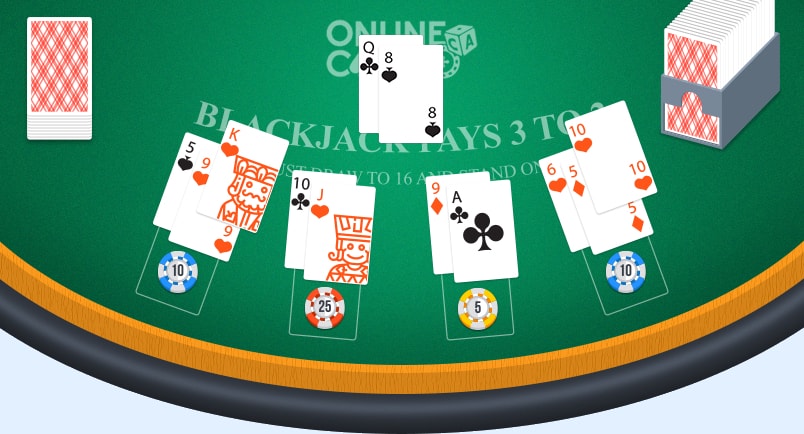
- Scoring more than them without going over 21 or
- Not busting when the dealer busts.
How it works
Other Rules You Need to Know About
Understanding Card Values
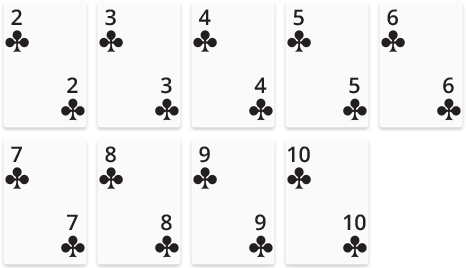
As long as you’ve played card games before you’ll have no trouble understanding blackjack card values. In blackjack, aces are worth 1 or 11, face cards (jacks, queens and kings) are worth 10 and all other cards count at face value. Let’s go through each group of cards separately to make it all really clear.
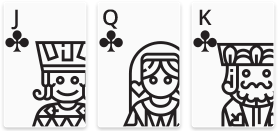
In blackjack you’ll hear different names for the group of cards that include jacks, queens and kings. Some people call them “face cards” because they have faces on them and they’re also called “paint cards” because of the coloured ink used in the pictures. Whatever you call them, they’re all worth 10 points.
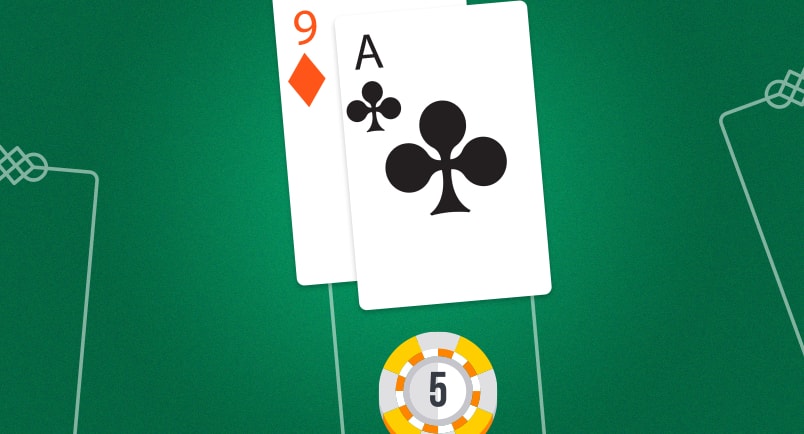
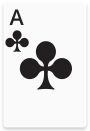
Aces are special cards in blackjack because they can be either 1 or 11 points. When you count it as 11 the hand is called "soft". An ace and 5, for example, is a "soft 16" that can also be counted as a 6. When an ace is counted as 1 point the hand is called “hard”.
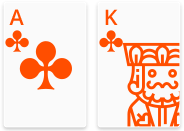
The best possible card combination is an Ace card and a 10 value card (10, J, Q, K). This is a natural 21 (known as blackjack) and if you have one of these combinations you will never lose, but always tie or win.
Key blackjack terms you need to know
The most fundamental part of blackjack to learn is the different actions you can take when you’re playing a hand. After that, the next step in your blackjack strategy training is to learn which action to use in every possible situation. When you know what to do in each situation, you'll know how to play blackjack. In this section we’ll explain all the actions clearly, plus the basics of when it’s best to use them.

HIT
Hitting means you want the dealer to give you another card. Generally speaking you want to hit when you think the dealer will end up with a better hand than you. Since you can only see one of the dealer’s cards it’s hard to know when to hit. Basic strategy says to always hit hard 11 or less, always hit soft 17 or less, hit hard 12 when the dealer shows anything except a 4, 5 or 6 and hit hard 13-16 when the dealer shows 7 or higher.
STAND
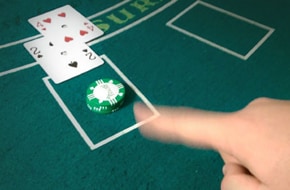
Standing means that you don’t want any more cards. This is clearly the best option when you have a really good hand but there are also less obvious times when it’s the best move. Always stand on soft 19 or more, always stand on hard 17 or more. Always stand on soft 18 when the dealer shows 9, 10 or ace. It’s also best to stand on hard 12 when the dealer shows 4-6 and to stand on hard 13-16 against a dealer 2-6.
SPLIT
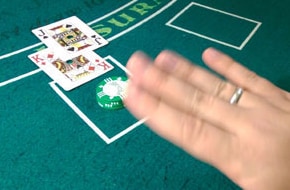
When you’re dealt a pair (two cards of the same rank) you have the option to split them into two separate hands. When you split a pair you must put out a second bet equal to your original bet. After you split the dealer puts anothercard on each of your original cards and you play each hand out individually. Always split aces and eights but never split fives and tens.
DOUBLE
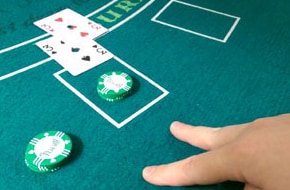
To double down you must put out another wager equal to your original bet and the dealer will give you just one more card. Doubling down is a powerful move and one of the most profitable parts of blackjack. Basic strategy tells you to double down on hard 10 unless the dealer has an ace or a 10. You should also double on hard 11 except when the dealer shows an ace, and double on hard 9 when the dealer is showing a 3, 4, 5 or 6.
SURRENDER
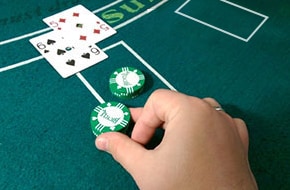
In blackjack you have the option of forfeiting the hand and keeping half your bet. Most casinos only allow you to surrender after the dealer has checked to see if they have a blackjack. If the dealer has a blackjack they win automatically and no surrender option is given. It’s profitable to surrender a hard 16 that’s not a pair of eights when the dealer shows 9, 10 or ace. It’s also smart to surrender hard 15 against the dealer’s 10.
INSURANCE
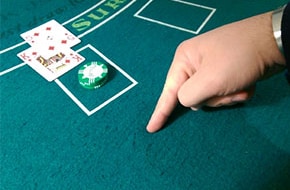
When the dealer has an ace showing they will often offer the players “Insurance” or “Even Money”. This is a special side bet that pays out if the dealer’s hole card is worth 10 points, giving them a blackjack. The strategy for whether to take insurance is easy: Don’t. It’s a bad bet that will lose you money in the long run and it’s really easy to stay away from.

Put Everything into Practice
How to Win at Blackjack
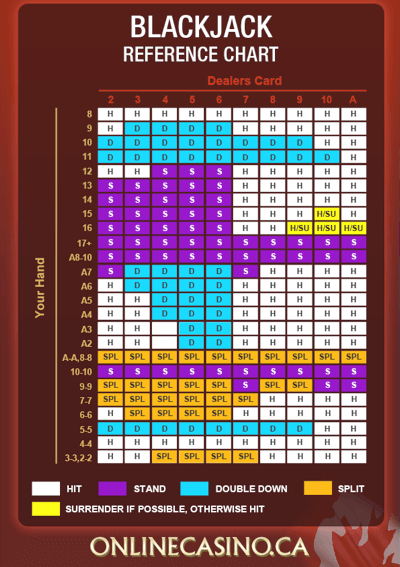
Learning blackjack strategy isn’t too hard but it does take time. The goal is to remember the most profitable action to take in any possible scenario. It’s a lot to remember, which brings us to our handy blackjack strategy chart below. You can use the chart for free and, with a little practice, you’ll start to get familiar with all the different hands and situations.
Top Blackjack Tips from the Experts
- Always split pairs of aces and pairs of eights. This is holy scripture straight from the blackjack bible and it will pay off big in the long run.
- Double on hard 10 unless the dealer is showing an ace or 10.
- Double on hard 11 unless the dealer is showing an ace.
- Never split a pair of tens, jacks, queens or kings. Splitting may seem like a smart move but a guaranteed 20 is far more valuable.
- Never take insurance. This is a special side bet we covered earlier and only superstitious gamblers think it’s a good idea.
Choosing the Right Game for You
Deciding which blackjack game is best for you comes down to a mix of getting the best odds and finding the best value and player experience. If you’re playing blackjack online you’ll have your choice of traditional blackjack or fancy new styles like Blackjack Switch and Progressive Blackjack.
Remember, you can try them all out for free before you risk any real money. We always suggest doing this to find one you like, then you can start comparing online casinos and using your bankroll.
The best online blackjack casinos offer big bonuses that match your first deposit when you sign up. They should also have a wide selection of different blackjack games including live dealer tables . Check out our recommended casinos to get started - and good luck at the tables!
Frequently asked questions
Have questions related to Blackjack? Don't worry, our FAQ has you covered.
What are the rules of blackjack?
The goal of blackjack is to beat the dealer by not going bust and getting a hand closer to 21 than the dealer. You can play with 1-8 decks. Aces count as 1 or 11, 2-10 cards count as per their numbers and all face cards are also worth 10. Each hand is valued at the sum of the point values of the cards, except a blackjack which is the highest hand.
Dealers give two cards to each player face up, followed by two cards to the dealer position, one of which is face up while the other is face down. If the dealer is showing an Ace or 10, they will offer an insurance bet before checking for blackjack, which would be a win for the dealer, beating all player hands except a blackjack which would be a push.
Players can choose to stand, hit, double, split or surrender. Once all the players stand or go bust, the dealer will play out their hand. If the dealer goes bust, any player who didn't bust will win. If the dealer does not go bust, the higher point total between the player and dealer will win.
When should you hit or stay in blackjack?
Always hit on hands worth 11 or less and stand on 17 or higher.
Double on a 9, or on a 10 or 11 if your hand is worth more than what the dealer is showing.
For hard hands valued 12 to 16, stand if the dealer is showing a 2-6 but hit if the dealer has a 7 or higher showing.
For soft 13 to 15, always hit.
Double down on a soft 16 to 18 if the dealer is showing 2-6, but just hit if the dealer is showing 7 or higher.
Does a blackjack beat 21?
Yes. Blackjack is the best hand that you can get. While 21 is a winning hand, blackjack still beats it.
Is there a difference between blackjack and 21?
Yes. Blackjack is a two-card hand worth 21, so an Ace plus a 10, Jack, Queen or King. 21 is any hand worth 21, no matter how many cards it takes to get there.
Blackjack is paid out 3:2 while other wins are paid out 1:1. So, if you wager $10 and get a blackjack, you'd win $15, whereas if you hit until you made a winning hand of 21, you'd win $10.
What is splitting in blackjack?
In blackjack, you are allowed to split pairs to make two new hands, such as splitting two Aces. You need to add a bet to back the second hand. Depending on the rules of the blackjack variation you're playing, you might be limited to a certain number of splits, doubling down after splitting or which hands can even be split in the first place. Remember that even if you split aces and are dealt a 10-value card on top, it counts as 21 after split, not a blackjack.
- Real Money Most Popular
- Best Bonuses Recommended
- Free Games
- No Download
- Sports Betting
- Highest Payouts
- No Deposit
- New
- Microgaming
- IGT
- NetEnt
- Blacklisted
- Online Gambling
- 88 Fortunes Megaways
- Goldfish
- Hot Shot Progressive
- Mega Moolah
- Monopoly Megaways
- Quick Hit Platinum
- Wheel of Wishes
- History of Gambling in Canada
- Reputable Casinos Guide
- Odds
- Top 10 Tips
- Become a Casino Dealer
- Gambling Laws